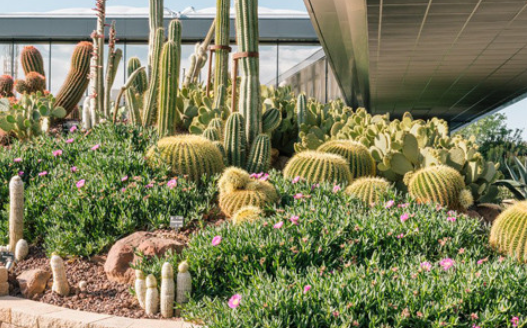
We specialize in large-scale and community-focused greening projects for desert and semi-arid areas. By combining soil science, drought-tolerant planting palettes, micro-catchment engineering, and water-efficient irrigation design, our center delivers landscapes that require minimal freshwater inputs while restoring biodiversity and improving microclimates. From pilot demonstration plots to full-scale land rehabilitation, our work prioritizes durability, low maintenance, and social value for communities living in dry regions.
Our approach bridges research, on-the-ground execution, and local capacity building so landscapes endure seasonal variability and thrive with limited resources.
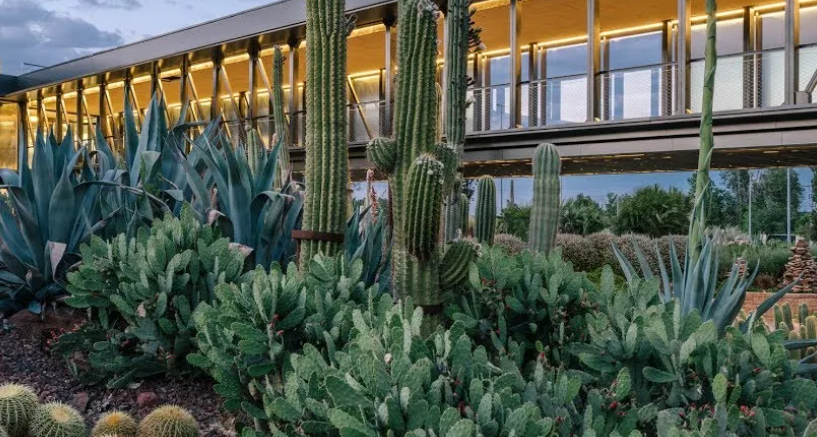
Founded by landscape ecologists, irrigation engineers, and community practitioners, the center is dedicated to designing and implementing regenerative landscape systems suited to arid climates. We run demonstration sites, conduct trials on soil amendments and mulching regimes, and develop planting palettes made up of native and climate-adapted species that provide ecological value while minimizing water dependency. Our practical research is shared openly with municipalities, land managers, and community groups to scale impact.
Capacity building is central: workshops teach hand-on techniques such as micro-catchment creation, contour swale installation, and efficient drip network layout. For landowners and public agencies, we provide feasibility studies, long-term maintenance plans, and habitat enhancement blueprints that align with local resources and governance. Our demonstrated projects reduce surface temperatures, stabilize soils, and offer new green spaces that support pollinators and native fauna.
We operate with a commitment to measurable outcomes — monitoring vegetation survival, water budgets, and social benefits to ensure each intervention delivers durable, cost-effective greening solutions.
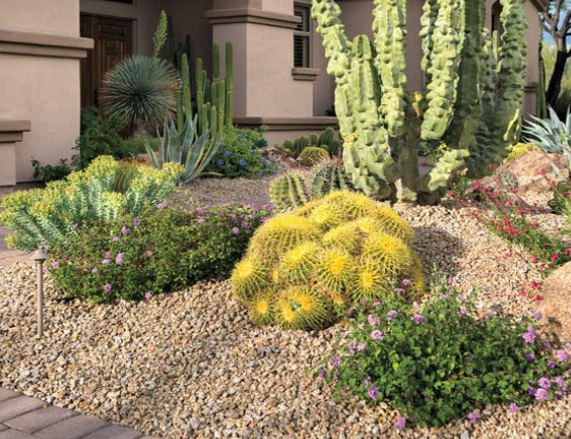
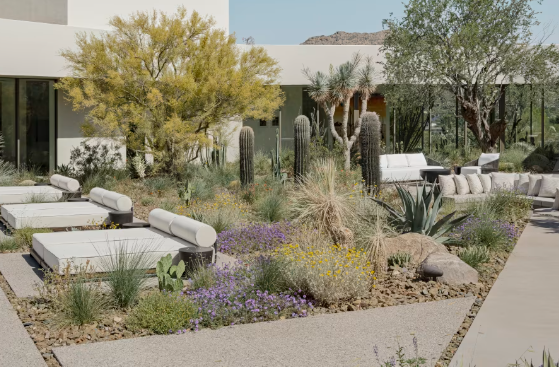
Our programs merge evidence-based techniques with pragmatic delivery so landscapes become functional assets rather than ornamental risks. Below are the core advantages we deliver to communities, land managers, and investors seeking durable, low-water green infrastructure.
We compile plant palettes built from local provenance material and species proven to thrive under limited water regimes. Each palette is selected for a combination of traits: deep rooting structures, seasonal water uptake patterns, salt tolerance where applicable, and ecological functions such as nectar provision for pollinators. Trials are performed at multiple micro-sites to calibrate performance across soil textures and sun exposure levels. This scientific rigor reduces mortality rates and minimizes replanting costs. The result is a living design that performs predictably across seasons—supporting habitat services while demanding minimal irrigation once established. Our team also tracks phenology and water-use efficiency to refine species mixes over time, ensuring landscapes remain resilient as climatic conditions evolve.
Strategic earth shaping—like swales, berms, and micro-basins—captures episodic rainfall and redirects it to planted zones, improving infiltration and reducing runoff. We design contours that work with local slopes to slow water flow, encourage percolation, and recharge shallow soils. Coupled with organic mulches and permeable surfaces, these measures extend limited precipitation into longer periods of soil moisture availability. For pilot and larger installations, we model water budgets to estimate recharge rates and irrigation intervals, enabling managers to optimize water use. This approach reduces dependence on piped water and provides an affordable, maintenance-light strategy to sustain vegetation in arid contexts.
Degraded desert soils often lack structure and organic matter necessary to support plant life. Our interventions include targeted soil amendments—compost applications, biochar integration, and microbial inoculants—to enhance aggregation, nutrient cycling, and water retention. By rebuilding the soil web, we accelerate seedling establishment and long-term root success. Techniques are tailored to local constraints: where material access is limited, we employ low-input strategies such as in-situ mulching and vegetation-based soil trapping to gradually accumulate organic content. Maintenance protocols include periodic assessment of soil respiration and infiltration rates so treatments are adapted as the site matures.
When supplemental irrigation is necessary, efficiency is paramount. We design low-pressure drip arrays, sub-surface emitters, and gravity-fed micro-irrigation systems that target delivery to root zones and minimize evaporation. Smart control systems with soil moisture sensors automate deliveries only when thresholds are met, conserving water and energy. For remote or off-grid sites, we integrate solar-powered pumps and simple cistern systems to store episodic supplies. This combination yields operational savings over time and lowers the technical burden on local operators—ensuring watering is precise, measured, and sustainable.
Sustainable landscapes require local custodianship. We run hands-on training for neighborhood groups, municipal crews, and volunteer teams focused on planting techniques, pruning, re-mulching, and low-cost monitoring. Stewardship plans delineate roles for routine tasks and provide straightforward indicators to track plant health and irrigation performance. By embedding knowledge locally, projects avoid abandonment and benefit from community pride and volunteer maintenance. Educational programs also include seasonal seed-saving, native plant nurseries, and small-scale propagation workshops so supply chains for restoration materials are locally resilient.
Every project is paired with monitoring protocols that quantify ecological outcomes—vegetative cover, soil moisture retention, biodiversity snapshots—and social benefits such as heat mitigation and improved public space usage. These metrics inform adaptive maintenance and support funding cases for wider roll-out. By demonstrating measurable returns, sites attract further investment and become templates for scaling up greening efforts across similar arid landscapes. Our reports translate ecological data into practical recommendations that local managers can implement to replicate success.
Our services are structured to support full project lifecycles: feasibility and design, installation, post-establishment maintenance, and community training. Each service line is modular and can be adapted to the scale and budget of the client.
We begin with on-site evaluations to assess soils, microtopography, hydrology, access to water, and socio-economic context. Feasibility reports present realistic scenarios, cost-estimates, and phased implementation plans. These studies include risk analysis for saline intrusion, sand movement, and seasonal water variability, enabling clients to make informed decisions about design and budgeting. Where remote, we complement fieldwork with satellite imagery and local liaison to gather community insights.
Our design packages include planting plans, earthwork profiles, irrigation schematics, and material lists. Plans are sensitive to maintenance capacity and emphasize native and climate-adapted species. Planting blueprints specify spacing, companion planting, and staged installation sequences to maximize survival while distributing labor needs over practical phases.
We handle compost delivery, biochar integration, and application of organic mulches to reduce evaporation and improve soil structure. Where off-site materials are scarce, we advise on locally-sourced organic amendments and in-situ mulching strategies that progressively build soil health without large external inputs.
Implementation of targeted drip systems, smart controllers, and gravity-fed cisterns are core offerings. We size systems to minimize energy loads, and provide commissioning services that train local teams on operation and troubleshooting. Solar options are available for off-grid sites.
From procurement to planting day coordination, our project managers ensure timelines are met and quality controls are observed. We coordinate labor, mobilize specialized equipment for earthworks, and supervise planting to guarantee design intent translates into successful establishment.
After installation we provide maintenance schedules, monitoring templates, and training sessions for local custodians. Adaptive maintenance reduces costs while maintaining system performance; our teams remain available for periodic audits and to update management plans as plant communities mature.